Gratitude and Grief: reflections on a stable summer amid climate crisis
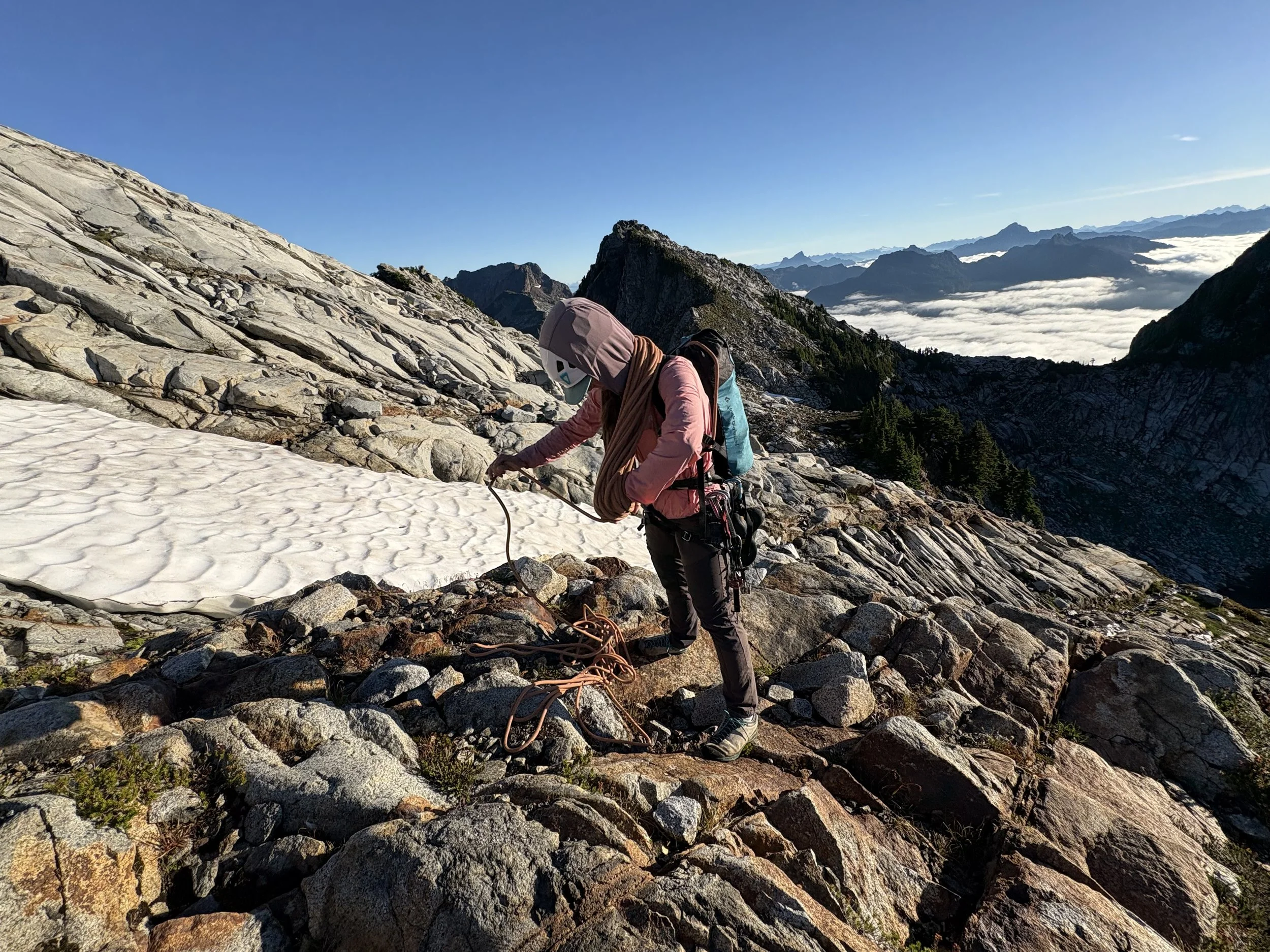
Smokeless skies in mid August - a rare site these days
Last August, I spent a weekend guiding several, lifelong Washington residents at Mount Erie, a climbing area near Anacortes, Washington. We reveled in the overcast day and 70 degree temps that kept us cool at an exposed, south-facing wall. The comfortable conditions felt like a rare gift, and I shared my gratitude with the group.
“This is what I remember summer always being like as a kid,” said one of the women, who grew up in the Seattle area. They did not remember “smoke season” being an annual event, and they said it rarely got above 80 degrees in Western Washington twenty years ago.
Most of last summer, climbing conditions were generally stable. There were no major road closures due to wildfire, and we were able to access all areas of the North Cascades throughout the climbing season. Lower elevation glaciers were pretty dry by August but remained passable, at least in my experience. It got uncomfortably hot for only brief periods, and I had a nearly 100% summit success rate on my work trips as an alpine guide.
In short, it was a “normal” summer, something that has become out of the ordinary in the Pacific Northwest. I gave thanks every time it rained, even while descending steep snow on Mount Shuksan’s summit pyramid in a steady drizzle. I relished every cloudy, 60 degree day in Index, knowing those are the best summer climbing conditions I could hope for. I had no canceled work due to flooding, wildfires, road closures, heat domes, or any of the other phenomena that have become all too common.
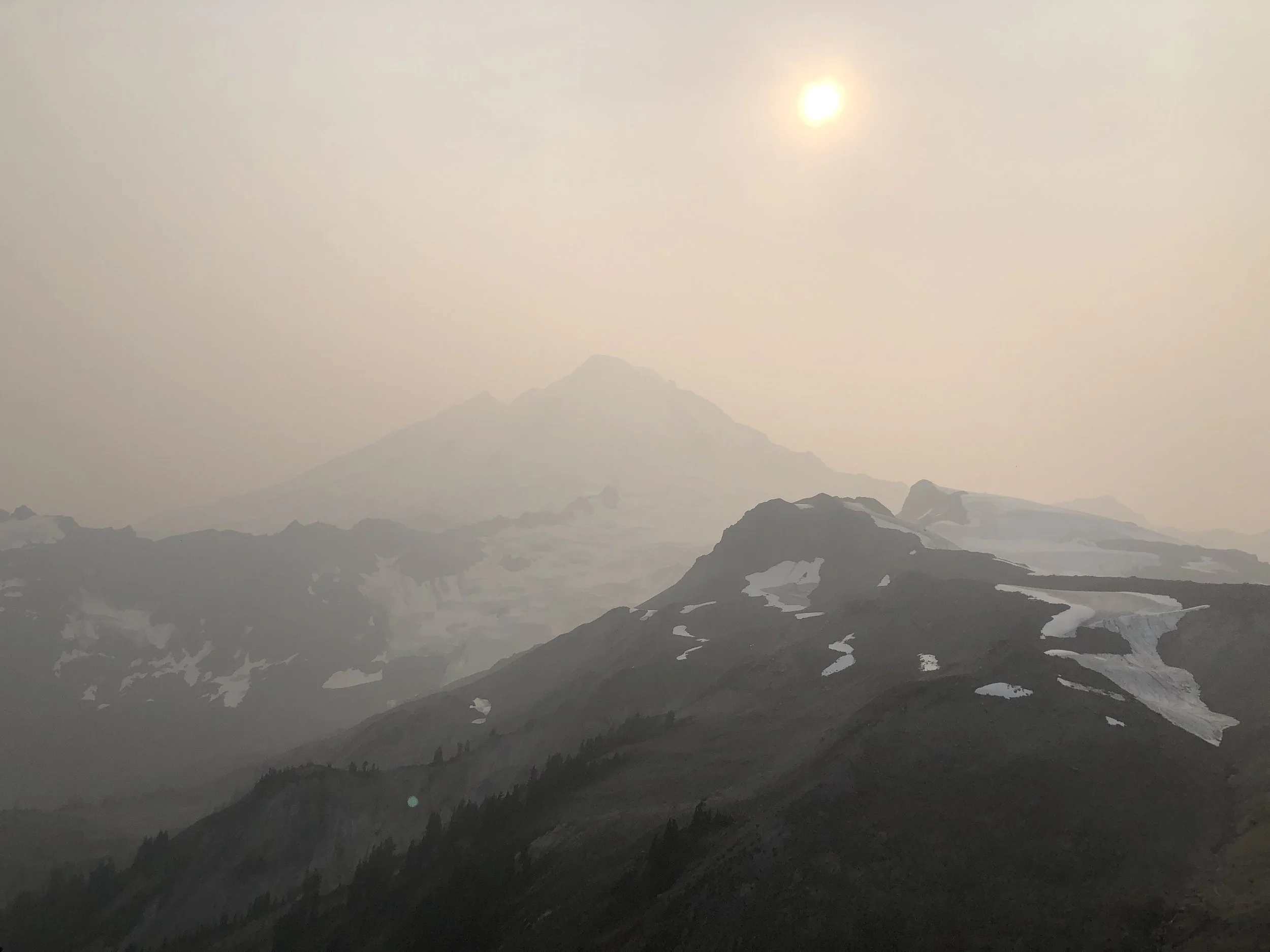
Hazy skies above Mount Baker, September 2020
Climate Grief and Shifting Baselines
All summer long, I also kept waiting for the other shoe to drop, feeling like the conditions were too good to be true. (Which of course, they were; huge fires raged just outside of Leavenworth by mid September.) With the gratitude for a stable climate comes the grief of knowing we can’t take it for granted. The cool temps, smokeless skies, and straightforward glacier travel were all reminders of what we have lost and what we stand to lose.
When I was a kid, I didn’t feel grateful for “normal” weather; it just was. I didn’t know at the time that there was an alternate reality in which natural disasters happened every year. Over the last eleven years of living at least part time in the Pacific Northwest, my sense of what is normal has changed a lot. Described by the National Park Service as “a gradual change in our accepted norms and expectations for the environment across generations” this shifting baseline is a common experience of climate change. The smokier our summers get, for example, the more we expect to have a smoke season.
During mid July in 2024, a friend and I attempted to scramble up West McMillan Spire in the Picket Range. We hiked all the way to Terror Basin just to be greeted with hot, smoky conditions in the alpine. Dismayed, my friend Liza said, “we usually get July.” We had grown accustomed to smoke rolling in sometime in late summer, but its arrival so early in July had us feeling robbed of the ever-shortening window of ideal conditions between rain and fire season.
Summer has felt marked by natural disasters since I moved to Washington in 2014. The winter of 2014-15 was one of the driest on record, contributing to one of the worst fire seasons in recent memory. During the summer of 2015, I worked for a youth program that had groups backpacking on Ross Lake as a fire broke out near Newhalem that closed Highway 20 through the North Cascades. President Obama declared a state of emergency due to the fires which allowed groups to evacuate through Canada without their passports, since their passage in the US was blocked by the fire.
In June of 2021, we all learned about new extreme heat phenomena as a “heat dome” brought triple digit temps to the Pacific Northwest. As I drove through Portland, Oregon during this multi-day heat wave, my car’s thermometer read “116.” Extreme heat led to rapid snowmelt which led to flooding and road wash-outs. Cascade River Road, which accesses some of the most popular alpine climbing venues in the North Cascades, was closed the rest of the summerr
Climate change became ever more personal in September 2022, as I woke up one morning to ash raining down in the forest around Index, WA. I was leaving town that morning for a wedding in Portland. As I drove away, I assumed that the sky was smoky from the fire that had been burning near Lake Wenatchee, on the other side of Steven’s Pass. I soon learned that it was much closer, lighting up the side of Mount Baring just a few miles down Highway 2. I tried to remember where I had stashed my passport and other important items as my partner gathered up our belongings and evacuated our small cabin, not knowing whether I would return.
A few weeks after evacuating Index, I found myself stuck on the wrong side of a landslide caused by torrential rains and exacerbated by fires from previous years. With each event, we adapt to our new normal, but should we? By grieving what once was and having gratitude for stable conditions, maybe we can remind ourselves that our shifted baselines were not always normal, so we are motivated to fight for what we can still save.
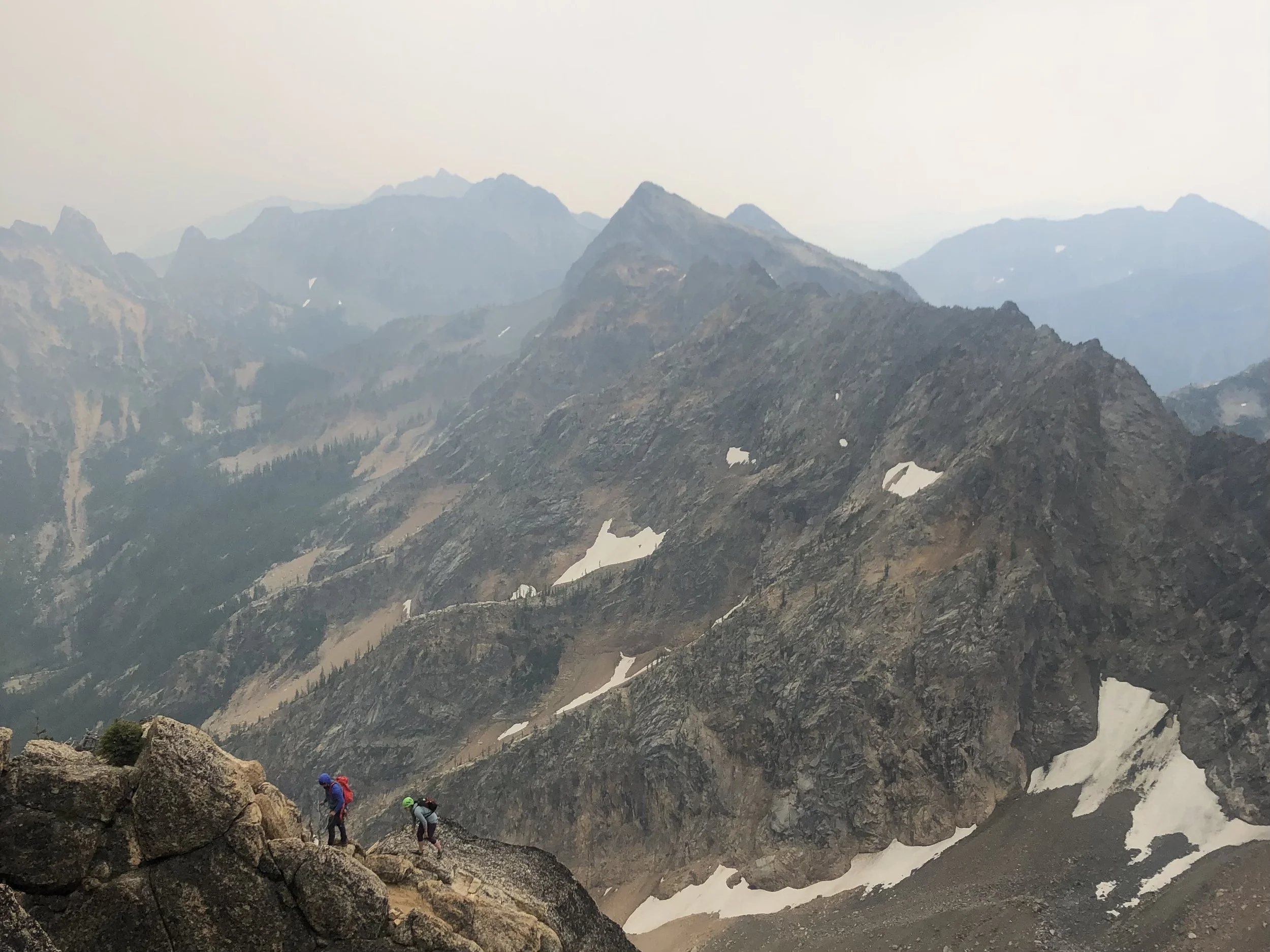
Climbing in WA Pass July 2021 as the Cedar Creek and Cub Cree fires burned in the valleys nearby
Relationship to Place and Climate Action
In all of the stories above, I have been personally affected because I live – somewhat by choice – a life that is uninsulated from the environment, at least relative to many modern US Americans. I’m outside a lot! My work and play is directly affected by weather, snow conditions, heat, and road closures. I also choose to live in the “WUI” or wildland-urban interface, which is less buffered from wildfire impacts than cities or suburbs. If I worked inside and lived in a more urban environment, I may feel less despair around heat waves or a dismal snowpack.
But this also means I have personal relationships and history with these places; the North Cascades and Skykomish Valley are places in which I have built community, have made many core memories, achieved (and failed at!) personal and professional goals, and continue to make my livelihood. I love and care about these places deeply, and they have given me so much in the last decade plus. Climate grief feels so heavy partly because of my love for these changing landscapes. The gratitude and the grief go hand in hand.
In her book Braiding Sweetgrass, Robin Wall Kimmerer describes a reciprocal relationship between humans and the land. She says the land “loves us back,” showing its love in beans, tomatoes, wildflowers, and all of the abundance it provides. At one point she asked her grad students, “what do you suppose would happen if people believed this crazy notion that the earth loved them back?” Would we find ways to give back to the land that gives us so much?
Grief is typically an emotion or state of being in which we are mourning something lost, but the worst impacts of climate change are likely still to come. “One of the difficulties of being alive on earth in the age of climate catastrophe is we find ourselves in the peculiar position of mourning the future,” says Lauren Markham in an essay excerpted from her book Immemorial. But taken by itself, grief about the future can immobilize action if we let ourselves become steeped in despair, she goes on to describe.
So I’m trying to hold my gratitude and grief hand in hand. How can my love of these changing landscapes drive action to help prevent them from future harms? What unique gifts can I offer back to the land, as Kimmerer asks in Braiding Sweetgrass? As I anticipate a nearly triple digit mid-March heat wave in the Mojave Desert – my other home – can I also give thanks for the birds chirping in the Joshua Trees, the desert floor awash with native flowers, and the chuckwallas scurrying into the shade of the granite cracks?
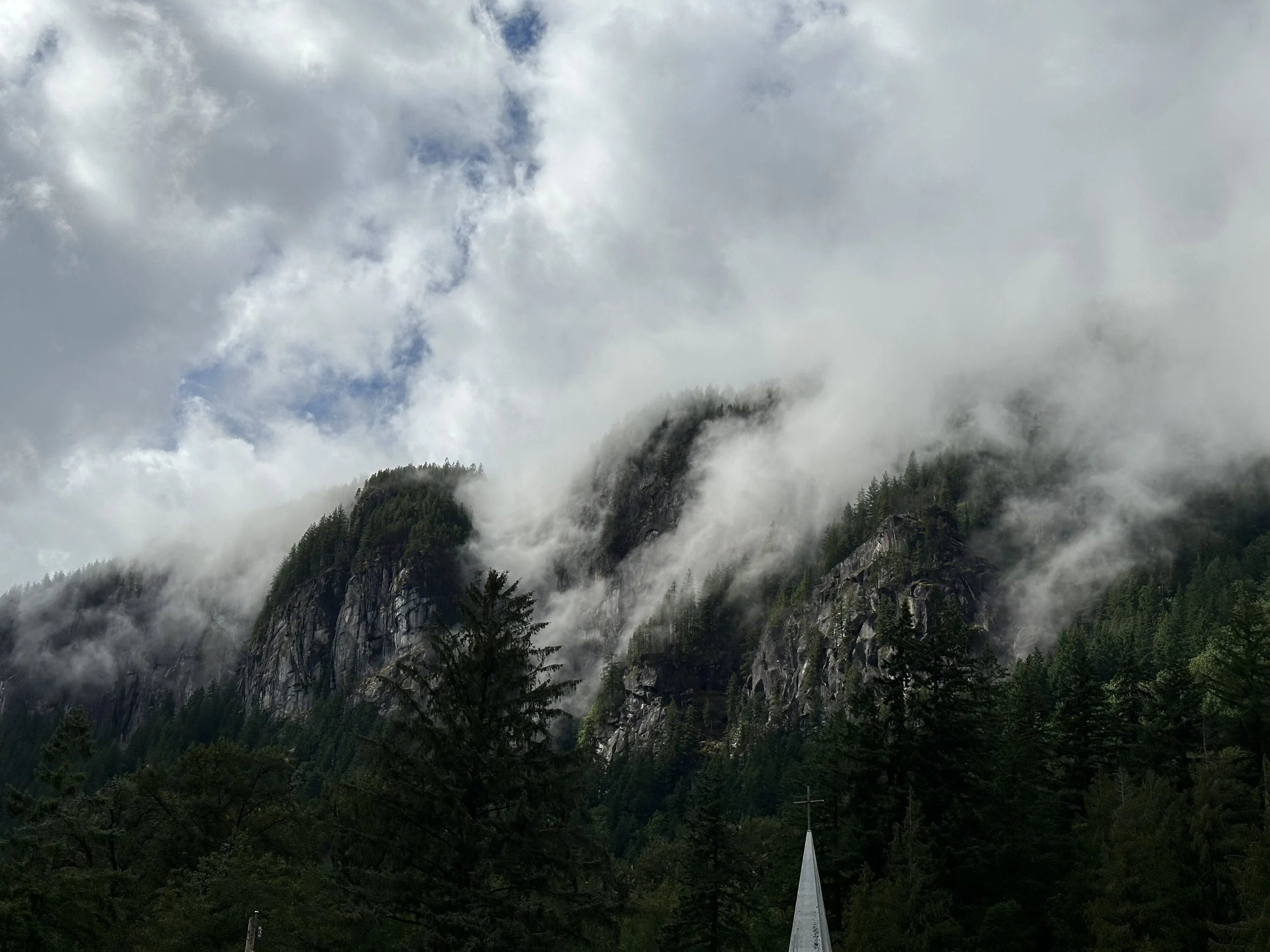
Walking through Index after it rained last summer, giving thanks for the clouds, lush trees, and wet granite